— I. —
Research
Museum drawers are opened, monographs consulted, field notes cross-checked. No plate is begun without a clear understanding of anatomy, habitat and taxonomic context.
— On the House —
A modern workshop devoted to the preservation, in image, of natural form.
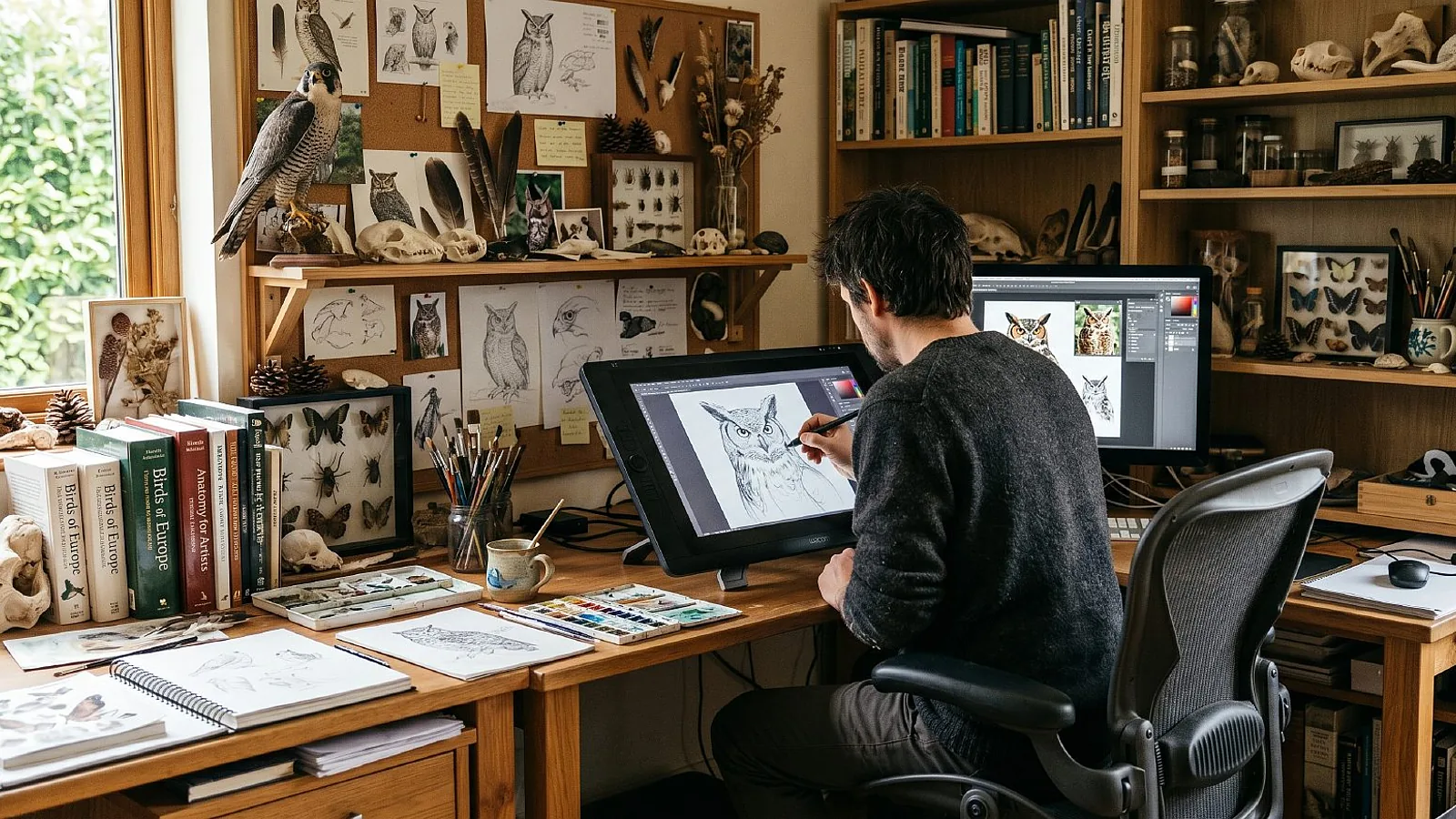
Curiosa Naturalis is an atelier producing illustrated scientific plates for more than 10 years and in the tradition of the great natural-history folios of the eighteenth and nineteenth centuries — the works of Charles D'Orbigny, John Gould and Ernst Haeckel and the engravers of the Dictionnaire d'Histoire naturelle.
Every plate begins with primary research: museum specimens, field photography, anatomical studies and consultation of taxonomic literature. From this material a first version is drafted, reviewed and then finished in digital wash to permit the precision of modern reproduction.
— The Method —
Each illustration passes through three deliberate movements before it earns the imprint.
— I. —
Museum drawers are opened, monographs consulted, field notes cross-checked. No plate is begun without a clear understanding of anatomy, habitat and taxonomic context.
— II. —
A study is drafted at scale, then iteratively reviewed. Linework is the bone of the plate — every hair, vein and scale considered.
— III. —
Colour is laid in the manner of a watercolour wash, but digitally — permitting the resolution and stability that modern reproduction demands.
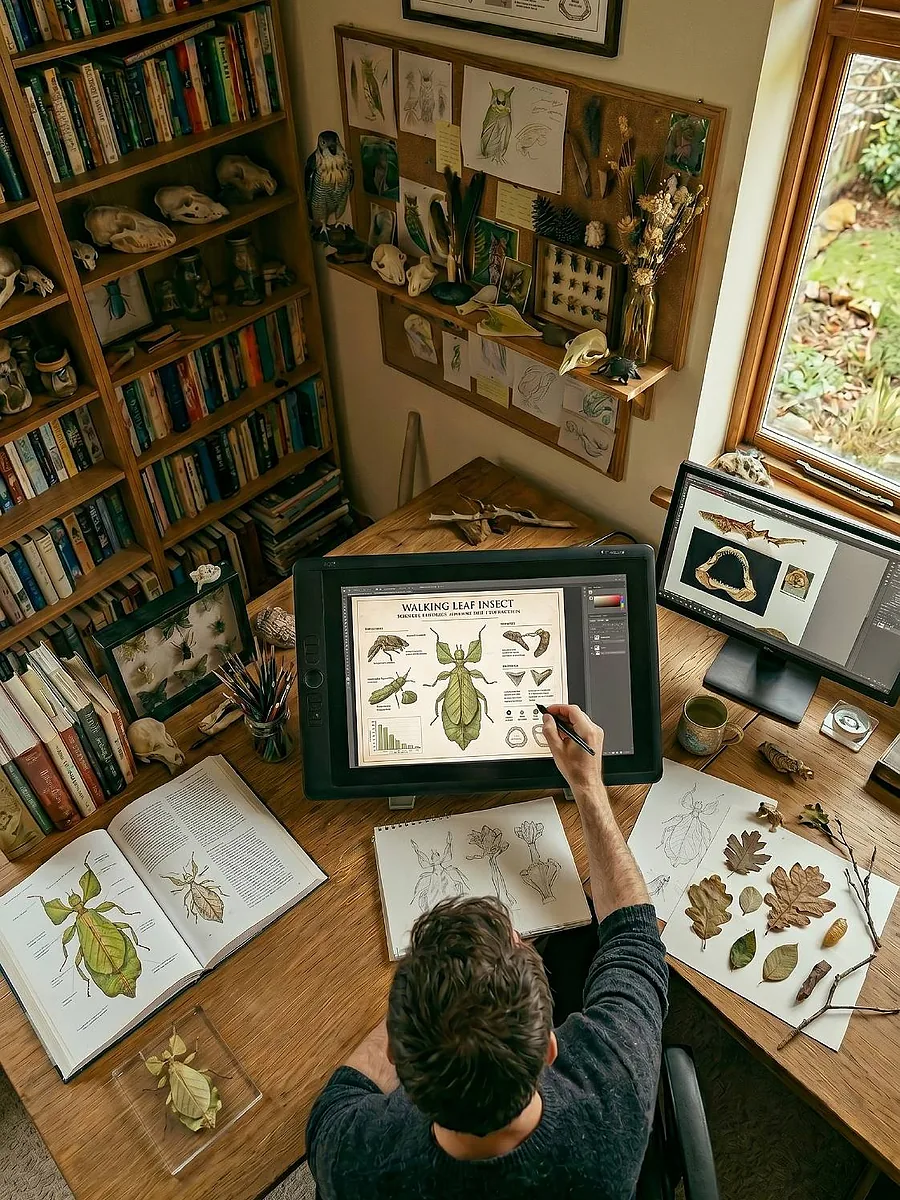
— Materials —
The studio holds a working library of more than four hundred monographs, a cabinet of pressed plants and entomological boxes, a collection of skulls and casts, and the brass instruments — dividers, callipers, loupes — that make accurate measurement possible. A close collaboration with Natural History Curiosities and field expeditions with Nature Stock.
Reference is everything. A plate that misrepresents its subject is, in the long view, of no use to anyone — neither the biologist who consults it nor the collector who hangs it.
— The Catalogue —
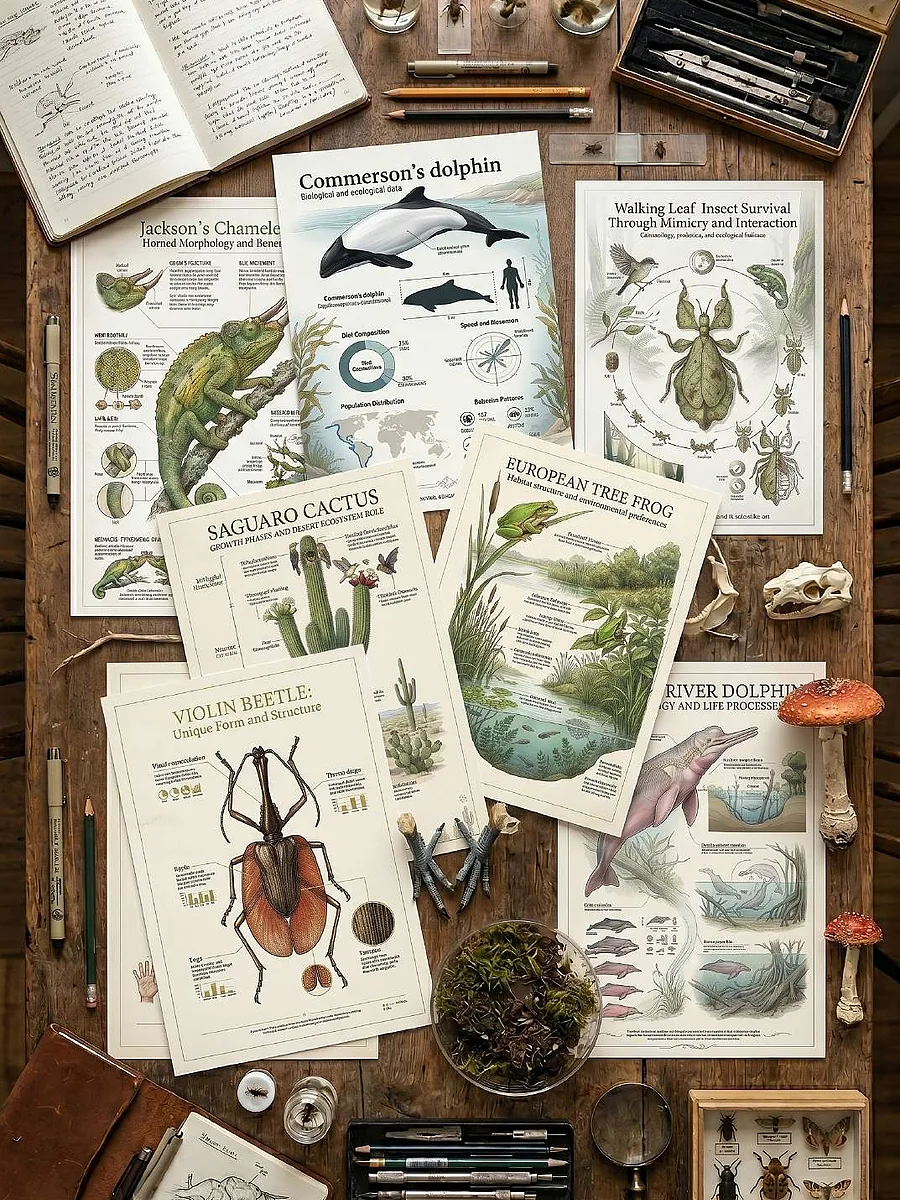
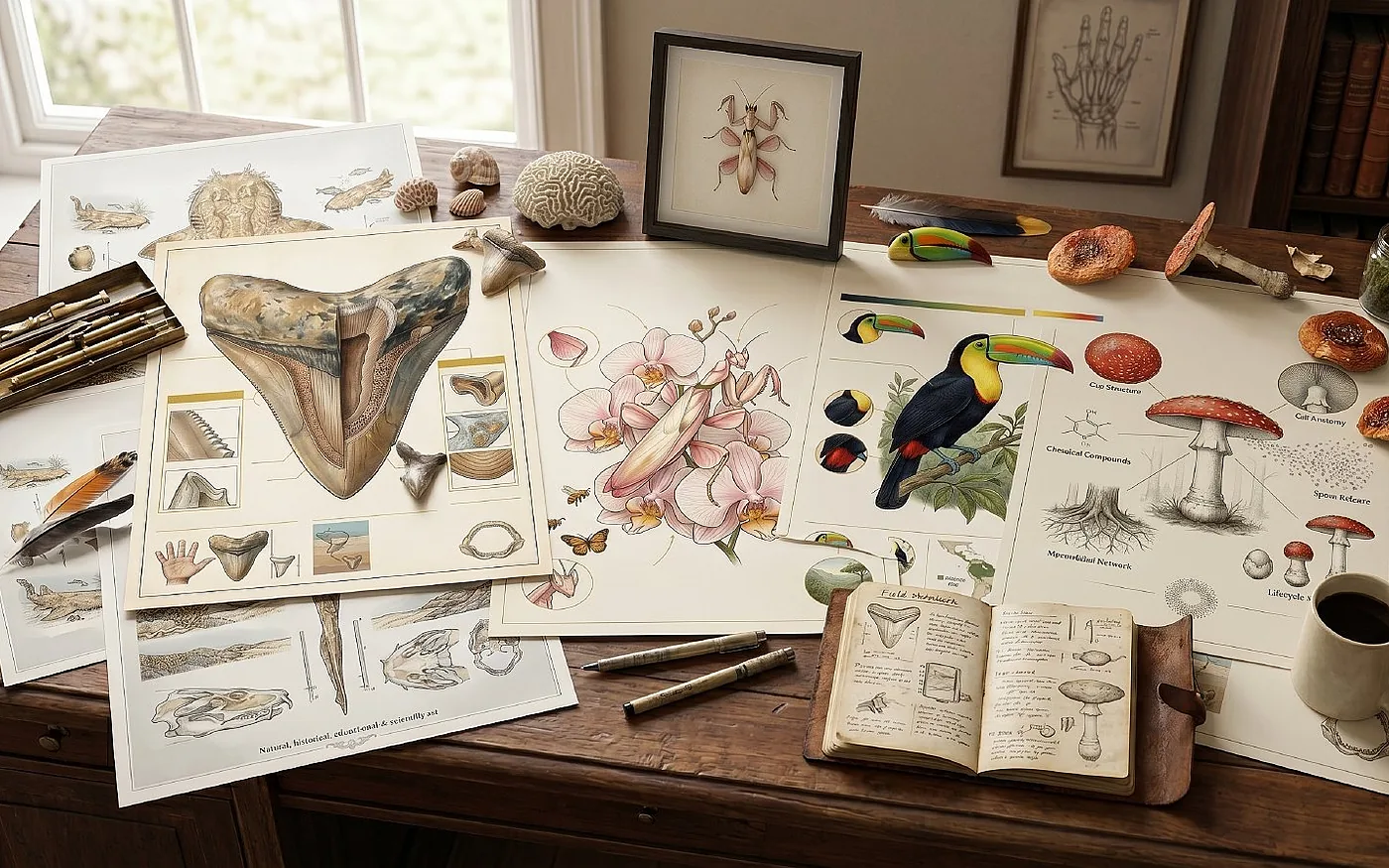
The catalogue spans mammals, birds, reptiles and amphibians, marine life, insects, fungi and the botanical world. Each plate is conceived as a self-contained study — anatomy, habitat, behaviour and ecological role brought together on a single sheet.
New plates are added at a deliberate pace. Quality is held above quantity; the imprint is only applied when the plate is fit to stand alongside its predecessors.
— Licensing —
Plates are released under three licences — personal, commercial and extended-commercial — to suit the working biologist, the editorial designer, the publisher of natural-history books, and the collector of scientific imagery.
Each licence grants high-resolution master files suitable for print at exhibition scale, alongside the watermarked previews available throughout the gallery.
Read the licencesHave a question about using a plate? Read the frequently asked questions or see how the atelier works on collaborations.
— Begin —
Over a hundred plates across mammals, birds, insects, marine life and botany.
Enter the gallery